
New Belgium Short Track Results

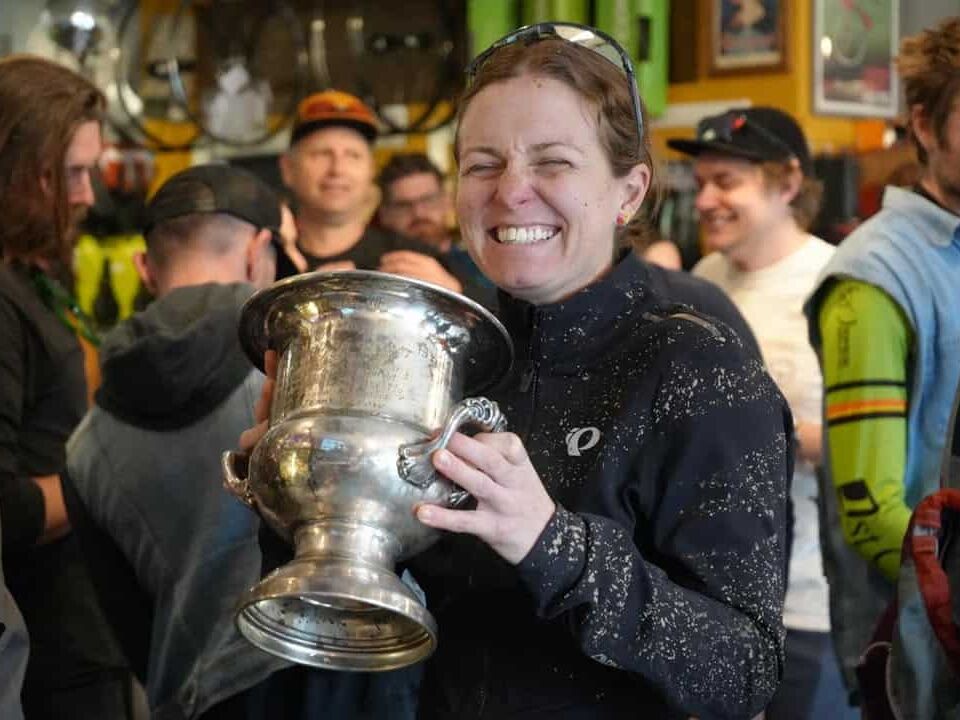
              Photo by Yann Ropars <br />

New Belgium Short Track Photos

Photos by Yann Ropars YGR Advertiser, Mike Weber getting done with style.           &...

Fort Collins Clothing Company Gears up for the 25th Annual

Fort Collins, CO, May 14, 2012 From the Fort Collins based Akinz clothing company. https://akinz.com Northern Colorado bike month is back and tha...

Polka Dot Jersey Auction

From Marcel van Garderen: A former teammate of Tejay and I from Montana, John Behrens, was hit by a car wednesday April 2nd and is in the ICU ...

New Belgium Short Track Week 1 Results

Results for next week should be more complete when we have the system up and going. Open Skyler Trujillo Steve Stefko Alex ...

  • New Belgium Short Track Results

    Wednesday, 16 May 2012 12:57
  • New Belgium Short Track Photos

    Wednesday, 16 May 2012 08:36
  • Fort Collins Clothing Company Gears up for the 25th Annual

    Tuesday, 15 May 2012 09:29
  • Polka Dot Jersey Auction

    Monday, 14 May 2012 08:35
  • New Belgium Short Track Week 1 Results

    Thursday, 10 May 2012 08:30
 
Frostbite Time Trial
Last Minute TT Tips


Tucker_Olander_frostbite_tt_by_Eddie_Clark
Tucker Olander ramping it up. Photo by Eddie Clark. http://www.eddieclarkmedia.com/Print-Gallery/2011-Frostbite-TT/16107364_wScej#!i=1209137407&k=Ek3Fv
Last week Chris Johnson interviewed three of the best time trialists in the Fort.  Here's what Nick Frey, Jim Dickerson and Roy Denoon had to say about why you should and shouldn't be doing in the days and hours leading up to this weeks Frostbite Time Trial.

Like landing a plane, the final approach before a target race isn’t the right time for broad course corrections or second guessing your trajectory (or flight school!)   If you don’t already have a map and a compass, there’s not a whole lot you do to get closer to the runway.  Likewise, if you are approaching a priority event and don’t have a solid foundation of training plan and preparation, you can’t cram a bunch of work into the final week and expect to reach your potential.  Indeed, you can’t do much to get stronger in the last week, but you can get weaker.

The Frostbite Time Trial kicks off the BRAC season this weekend, and the spring season is just around the corner.  We know it’s only February, but for some of you, Frostbite will be your first taste of racing, and for others (like yours truly) it’s a valuable gauge of how pre-season training has progressed.

With that in mind, YGR took a few minutes to reach out to some northern Colorado time trial experts for a taste of some pro and veteran wisdom.   As with any training program, its important to take notes and track your progress from week to week and season to season to find what works for you.  But here’s what works for 3 of Fort Collins finest:

The Lead Up Week

One unanimous tip from our panel: don’t wait till the night before a race to tune up or prepare your bike.

Jim Dickerson – local masters racer and stalwart TT performer says “No changes the week before, other than chain lube and tire pressure! I have been fortunate to keep the position and equipment the same for probably the last 5 years. Any changes I do on equipment or position are done very early on in the season, at least a month before an event.”

Dr. Roy Denoon, wind engineer, aerodynamics expert, long time cycling coach and time trial specialist offers the following insights for those who may not have spent much time on the TT bike (or aerobars) over the winter.

“Prepare the TT bike early in the week so you have the opportunity to fix anything in plenty of time. The roads up around Rawhide are not the smoothest, and it's important to make sure nothing is going to work its way loose during the race. Clip on aerobars are the classic for this, loosening and rotating. So, don't just stick the bars on the bike on Friday night. You should try to ride your TT bike at least once during the week in the set up that you intend to ride for the race. This'll also ensure that the gears are working, brakes are in order, tires are in good condition, and that you can still comfortably get into the aero position you were riding at the end of last season.” 

When it comes to race week workout intensity and volume, 2007 U23 TT Champion and former pro Nick Frey, owner of Boo Bicycles had a lot to say:

“You want to take a couple very easy days and then a day for openers.  If you race on a Saturday, ride EASY on Wed/Thurs and another easy ride Fri but with some ramp intervals...slowly ramp from 80% TT pace to 120% of TT pace for five minutes, 10% step per minute.  You want to really squeeze the most out of the last minute, high cadence (100+) to get the HR up and not blow the legs out too much.  On your TT bike of course, and at the same time of day as you'll race on Saturday.

Never bother with a ‘taper’, [which] only applies to REALLY long events like an Ironman or something.  You want to do a couple of your hardest rides the weekend before a huge event, sometimes on a Mon/Tues if you race on Saturday.  Those are your final interval rides or climbing rides where you really kill it for certain periods, then use Wed/Thurs to totally recover.”

Dickerson concurs on the issue of “tapering”: The lead up to a big event will be very similar to a training week in the frequency of rides... but there won't be as much intensity in the leadup to the race, so I don't really taper the mileage, just a taper in the intensity.”

The week before is also an excellent time to focus on TT skills:  practice starting and clipping in.  find your ideal starting gear. Practice cornering on the aerobars as much as possible.   Practice turnarounds:  don’t sit up and coast into the turnaround, keep the speed and effort up till the last possible moment, brake hard, and get back up to cruising speed quickly,   this takes practice as its NOT a sprint, and shouldn’t feel like one.  The goal is to minimize time spend below your cruising speed.

As mentioned above if you do any work on your bike, do it early in the week and get in some miles with any fixes: make sure bolts are tight, cables are electrical taped down where ever possible, brakes are clean and centered, tires are free of debris.

The Big Day

You’ve done your training blocks, tracked your improvement, you’ve tuned your bike, and now its race day.   What happens between the alarm going off and the clock starting is every bit as important as what happens on the course.

Again, the panel agrees on good high carb, low fat breakfasts, ideally around 3 hours before race time.  “a big plate of pancakes 3 hours before- road cakes digest easily for me and don't sit heavy.” Dickerson submits. .

Frey’s menu is similar in spirit but goes even further in his admonishment against eating too close to the gun “Always stop eating solid food at least 3hrs before a TT.  My favorite "final meal" is oatmeal with raisins and brown sugar.”

Dr. Denoon echoes the above and reminds us that “the biggest mistake … you can make is eating too much or too close to the start. The mid-race vomit generally loses at least a few seconds.” 

You were warned!

Make sure to get to the venue well ahead of time.  Figure out how long it will take to drive (or ride), park, register, check in, pin on a number, set up a trainer (or training wheels), get the appropriate warm-up, break down the trainer, mount up the race wheels,  and get to the gate for your start, and then add an hour to that.

Many time trialists supplement number pins with spray adhesive, to eliminate flapping and drag from race numbers.   Have a friend slap on the sticky number while you’re on your bike, in your TT position, so it fits smoothly against your kit or skinsuit.

Warm ups

Warm ups are a personal thing and the best way to find a routine that works is experimentation, but one commonality to all of the experts on the panel was getting in at LEAST a half hour, and at LEAST a couple of moderately hard efforts.   In particular, Dickerson prefers “to ride on the road for an hour before the TT (I hate a trainer warm up), with maybe a couple of 5 minute intervals at 80%.”  

Theres a bit of finesse timing the warm-up so that you finish with a short cool down, take care of any repacking of supplies and make your way to the start line with as little down time for your legs to cool off as possible.    Always err on the side of getting to the start on time, obviously.

Frey and Dickerson agree “no gloves”, unless you have the luxury of a skinsuit with gloves already sewn in.

The Race

At the start line, double check your gearing to make sure its where you practiced it (you DID practice it!).  Visualize the road ahead, and breathe slowly and deeply, while you wait your turn.   You probably have a leg you favor, start with that crank at 30-40 degrees to the horizon.   Remember, the goal in your first few seconds is to get up to cruising speed as quickly as possible, as any time below cruise speed it wasted time.    Spin up (most find it easier to err on the side of an easy gear here) and settle in for the long haul.   Remember, this isn’t a full out sprint to go as fast as you can- if your cruising speed is 25mph, don’t spin up to 30 for your start.  Shoot for something closer to 23.

From there, Frey advises: “start out SLOW SLOW SLOW!!!  Ramp up to speed gradually in the first minute…  Then the next 5 minutes should be spent getting from 95% to 100% of TT pace.  Then settle in as soon as you possibly can...that means steady breathing, pedaling circles, and in a good place mentally.”

In Contrast, Dickerson’s strategy is to “start hard and fast then back off just a touch, last year at states I was at my target HR within first minute and stayed within two beats for the next 52 minutes.”  

Denoon warns “It's probably going to be cold and with time trials there is always the temptation to ride BIG gears. For an early season time trial like this, especially one in rolling terrain, it's important not to get carried away and try to ride the gears you will ride in June.” 

All 3 agree that for races around a half hour or less, there’s no need to bring food or water along unless it’s hot out.

Form

While we all admire the sleek look of a pro cyclist in a deep aero-tuck, it’s important to balance aerodynamics and power. As with other preparations, one weeks out is much too late in the game to start developing the flexibility and core strength to make a flat-backed position powerful and sustainable for the course of a half hour race.

“Stay in the aero position on bars,” says Dickerson, “I might stand up once or twice to keep cadence from dropping too much on the hills. Keep focus, always be thinking about the guy that could potentially beat you by 5 seconds, if you aren't thinking about it you can easily lose a hand full of seconds by not holding a good position, being in the wrong gear at the start of a rise, being lulled to sleep by a rider you are catching fast.” 

“Smile!” Doctor Denoon adds, “Smiling keeps the neck muscles relaxed, which lets you keep your head tucked down. Keeping the head down is the biggest free ride in terms of aerodynamics. This doesn't mean you should be looking down, though. You need to be looking ahead all the time.” 

Smiling is great advice, especially when, as Frey puts it” You want most of the TT to be on the knife edge between very uncomfortable and totally unsustainable.” Got it?   Ouch.

“And that's much more difficult with a hilly course.” He continues. “The key is to focus on deep breathing, exhaling, and pedaling circles and a steady power output, no matter what the course is doing… and shrug your shoulders towards your ears—it makes a HUGE difference in aero and also opens up your rib cage for better, deeper breathing.  It's something you must always concentrate on doing during a race because it feels unnatural, and you have to actually tense your shoulder muscles to pull off the shrug.  But it makes a huge difference.”

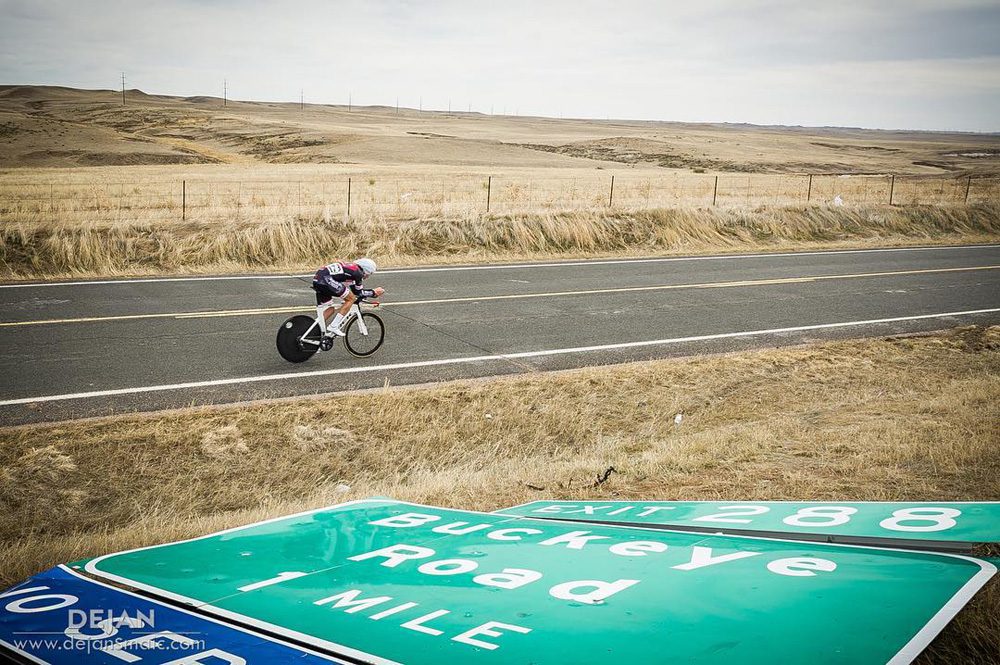
Hopefully you’re familiar enough with the course to know when the finish is coming, or at least when to start looking for 1mile or 2K signage.  This is where you let it all go. For the last 3 minutes, leave it all on the road.  Burn every match. There’s nothing left but the finish line.  Losing by a handful of seconds and knowing that you left something in the tank back at the finish line is hard to swallow.

After the race don’t collapse on the ground, spin easy for a bit and gradually bring your heart rate down.   Rehydrate and start replenishing your body with your nutrition of choice.

Time trialing is an incredibly challenging discipline that requires preparation, mental focus, and physical fortitude.  Whether you’re jockeying for a win, sparring with a local rival, or simply looking for a personal best, knowing you gave everything and have no regrets is a great feeling.    By soaking in the experience and wisdom of the many seasoned experts here in Fort Collins, and recording your own experiences over time, you can realize huge gains and continually narrow the gap between performance and potential.

comments
 
Frostbite Time Trial Flyer

Click Flyer to register.

FROSTBITETTentryform2012-2b

comments


Joomla Templates by Joomlashack